Marketing for horticulture and fresh produce
The category review sets your year, so every week between reviews either builds evidence for the next submission or it does not.
Where the money moves.
A retailer line review is the only meeting that really counts, and it is not won with brand adjectives. The buyer arrives holding scan data, rate of sale, wastage and category growth, then asks what your brand does for the category rather than for you. That is a marketing problem wearing a sales problem's clothes. Demand you can prove, shopper research you commissioned, and a provenance story with real pictures attached are the arguments that hold in that room. We build the year so the evidence already exists when the submission is due.
Then there is the window. A cherry program runs for weeks, a mango season starts in the north and works south, and if the campaign is not live the week volume peaks, the year is gone. This is not an always-on brief. It is a sprint that has to be built and approved in the quiet months, loaded, and switched on when the first pallets land, with creative already cut for every format so nothing sits waiting on sign-off while fruit sits in a distribution centre.
The pack is the only media you fully own at shelf. A punnet, a bag, a sleeve, and a code that leads somewhere worth scanning can turn a shopper into an audience you can reach again without paying anyone for access to them. Certification does work here too. HARPS, Freshcare and GLOBALG.A.P. read as compliance to you and as reassurance to a shopper, and country of origin labelling is enforced, so provenance has to be exact rather than warm.
Reporting is written against rate of sale and distribution. What moved in the weeks a campaign ran, what the retail media platforms returned across the same window, and which piece of work a category manager can lift straight into their own deck. Accounts, domains, shopper data and image libraries sit in your name from day one, so a season you paid to document becomes an asset you keep rather than something that resets when an arrangement changes.
What we run.
Category submission evidence
The shopper research, demand proof and provenance assets your range submission needs, produced across the year rather than assembled the fortnight before the review, and written so a category manager can lift a page straight into their own deck.
Season sprint, built in the off-season
Every asset for the window cut and approved before harvest starts: retail media, social, recipe content, sampling collateral and the trade announcement, so nothing is being written while volume peaks and the window closes.
On-pack to owned audience
A scan destination worth the shopper's time, tied to the variety in their hand: the grower, the region, ripeness, what to do with it tonight. That scan becomes an email address you own rather than a shopper someone else owns.
Retail media and search inside the window
Cartology and Coles 360 placements timed to the exact weeks of supply, run alongside search and AI answers for the variety, so a shopper researching a cooking question meets your brand before they reach the shelf.
Grower and provenance production
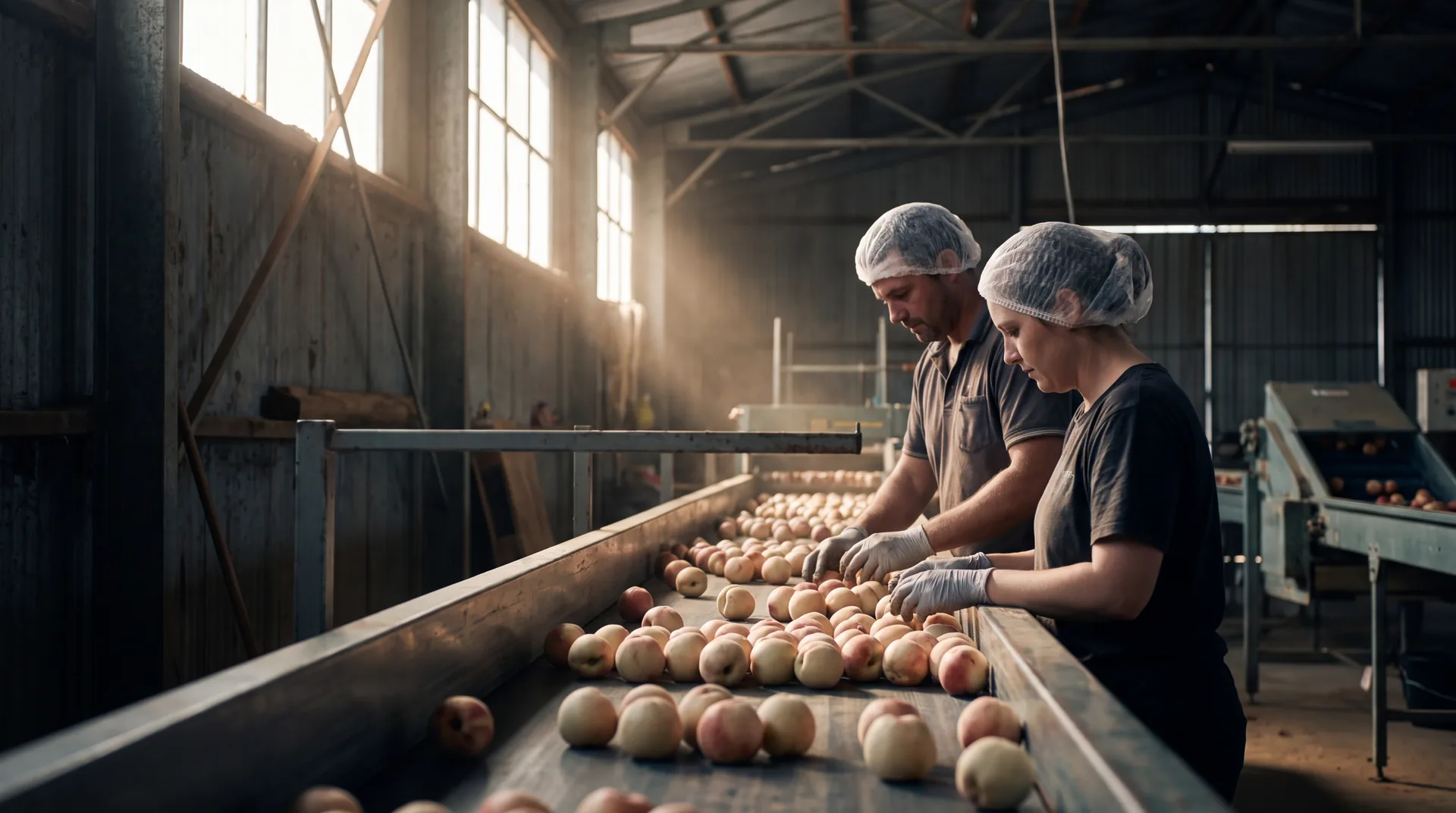
Photography and video shot in the orchard and the packing shed during the season and banked as a library. Real growers, real regions, no stock, usable across retailer decks, packaging, trade press and social for years.
Questions we get asked.
Because rate of sale decides whether your line stays on the plan. A buyer ranges what moves, and demand you created is the cleanest evidence you can bring into a review. Consumer marketing in this category is not brand building for its own sake, it is the mechanism that produces the numbers your submission is judged on.
That is the normal shape of this work. Everything is produced and approved in the quiet period, staged against the first-pallet date, and switched on the week volume lands. We plan for the season starting early or late, because it usually does, and hold flexible media rather than fixed insertion dates.
We do, before anything ships. Origin statements, certification references, and any nutrition or health claim are checked against the labelling standard and against the certification you actually hold. On fresh produce the risk is usually enthusiasm rather than intent, so the review happens at draft stage rather than after a pack run.
It sharpens it. The branded line has to earn its price gap on something a shopper can see and taste, which usually means variety, region and grower rather than packaging design. We build the case for that gap so the branded line is never presented as a slightly nicer version of the same fruit.
Also in primary industries
Talk to us.
9 services under one team, run against the numbers your business already reports on.





Contact the Ignis Team
Send through your details and we will audit your business before we reply.