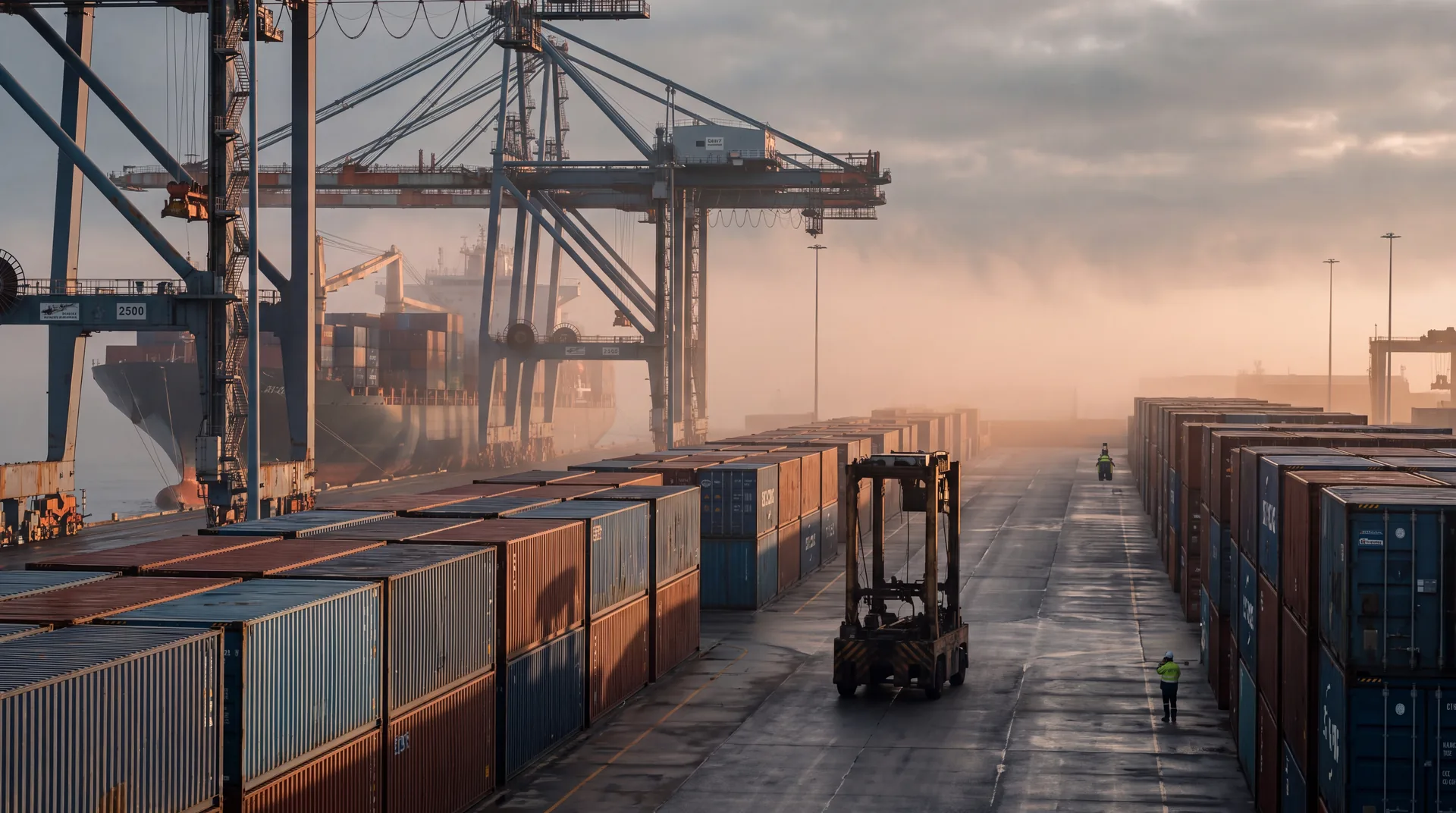
Marketing for shipping lines, terminals and port operators
Cargo follows carrier relationships and landside performance, so the work is publishing proof of both to the people who allocate volume and the people who regulate it.
Where the money moves.
Four audiences, one organisation, and they want opposite things. A shipping line evaluating a call wants berth productivity and reliability. An importer wants landed cost and certainty. A transport operator wants a slot in the vehicle booking system and a truck turnaround time that does not destroy their day. A department writing a briefing note wants something it can cite. A single corporate site attempting to serve all four serves none of them, so the architecture separates the paths and gives each audience the evidence that actually moves it.
Landside performance is the commercial argument, and it is already public. The ACCC publishes container stevedoring monitoring every year, your customers read it, and it becomes the version of your operation that circulates whether you participate or not. Publishing your own turnaround times, slot availability, rail modal share and crane rate, kept current on your own site, changes that. It gives a customer something to quote in their internal review, and it gives your commercial team a fixed reference point instead of an argument reopened every quarter.
This industry runs on a calendar and everybody knows it. Brown marmorated stink bug measures land in the same window from September, cyclone season closes northern ports, volumes surge ahead of Chinese New Year, enterprise agreement negotiations arrive on schedule, and a cyber event arrives on nobody's. Communications built after the event begins are always late. Advisory templates, an operational notices channel customers already subscribe to, holding statements and a spokesperson brief are prepared in the quiet months, which is the only time they can be written properly.
Terminal access charges, planning approvals and productivity are political questions with commercial consequences, so public affairs and marketing cannot be run by separate parties telling different stories. Ignis runs both from one in-house team: the submission, the media position, the customer advisory and the tender response written by people who have read each other's work. Accounts, domains and content are registered to you from the start, and reporting is written against volume, calls, landside throughput and contract retention.
What we run.
Audience architecture
Separate, properly built paths for carriers, importers and exporters, landside transport operators and government. A line evaluating a call and an operator chasing a slot need different evidence, different depth and different language, and neither should have to hunt for it.
Operational performance publishing
Truck turnaround, slot availability, rail modal share and crane rate maintained on your own site rather than surfacing once a year in someone else's monitoring report. Performance becomes something a customer quotes internally when defending their routing decision.
Public affairs and stakeholder communications
Submissions, ministerial and departmental briefings, planning and community material, and the media position that has to sit alongside them. Written by the same team producing the customer content so the story never forks between audiences.
Trade media and conference programme
Placement and commentary in the maritime and cargo press, speaking positions at the industry conferences your customers attend, and executive profile that makes a commercial meeting easier to secure and shorter to open.
Advisory and disruption systems
An operational notices channel customers actively subscribe to, advisory templates, holding statement bank, spokesperson brief and stakeholder contact tree, built well before biosecurity intervention, industrial action or a system outage requires them.
Questions we get asked.
Because the people around them are not a short list. Transport operators booking slots, customs brokers, empty container parks, exporters choosing a route to market, journalists and departmental staff drafting briefing notes all search first. What they find sets the frame before your commercial conversation begins.
They run as one programme here. Terminal access charges, landside performance, planning approvals and industrial relations are commercial issues with a public audience, so the submission, the media statement and the customer advisory need to say the same thing. One in-house team writing all three is how that holds.
The structure exists beforehand. Advisory templates, an operational notices page customers already use, a holding statement bank, a spokesperson brief and a stakeholder contact tree. Cyclone closure, industrial action, a biosecurity intervention and a system outage each need a different first hour, and that hour is decided in advance.
Brown marmorated stink bug measures arrive in the same window every year, so the customer communications are drafted in advance rather than scrambled in September. Treatment requirements, affected origin ports, likely landside delay and what an importer should do next, published early and revised as the department updates its requirements.
Also in transport and logistics
Talk to us.
9 services under one team, run against the numbers your business already reports on.





Contact the Ignis Team
Send through your details and we will audit your business before we reply.