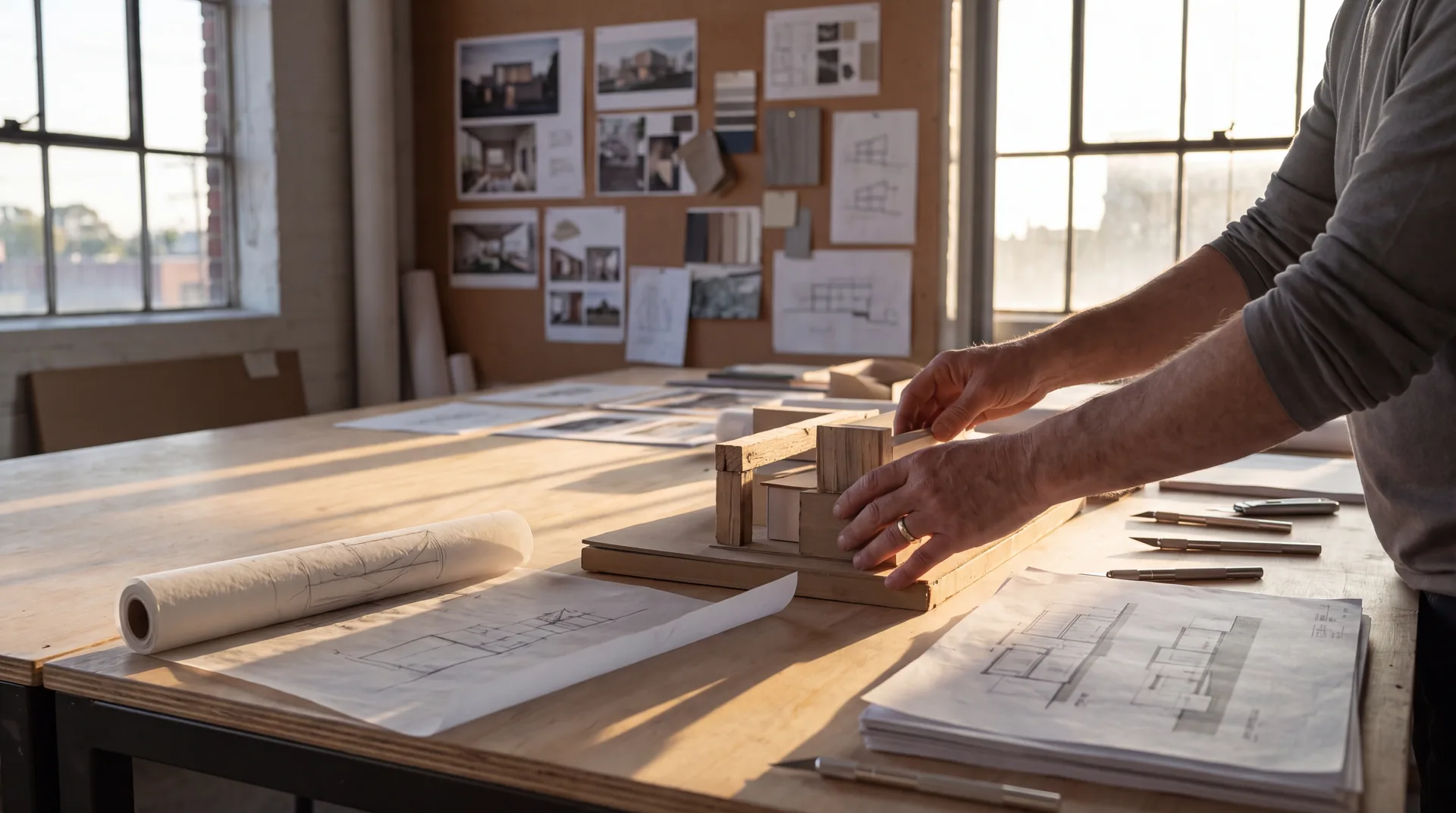
Marketing for architecture practices
For practices where the next commission is decided by photography, publication and a portfolio a developer reads long before anyone speaks.
Where the money moves.
Publication runs on a calendar that has nothing to do with your project program. Awards entries close months before results, editors plan issues well ahead, and none of it moves without a completed shoot and a signed release from both client and builder. A practice that books photography at practical completion, rather than remembering it the week an entry closes, ends the year with a body of usable material. We run that calendar backwards from the entry dates and the editorial windows, and brief the shoot so one set of images serves the submission, the project page and the feed.
Developers and institutional clients shortlist from a portfolio before a conversation happens. That portfolio has to carry more than image. It has to show the brief, the site constraint, the planning pathway and what the practice did about each, because the person selecting is weighing whether you can carry a difficult site through a panel without the program falling apart. A project page written as a case, with drawings, photography and a plain account of the planning outcome, does that job. A grid of hero shots does not.
A practice is chosen for a point of view. Yours already exists in the way the studio talks about reuse, density, climate or material, and it usually stays in the studio. Putting it into public writing under the directors' names is what turns a name on a list into a considered choice. Editorial pitches land more often, awards submissions read better because the argument was already made, and the graduates you want start applying to a practice that stands for something specific rather than one with a tidy website.
A Practice Director signs this against fee quality, not follower count. So the report covers the enquiries that arrived, the type of project each one was, and whether the mix is moving towards the work the studio wants to be doing in five years. Photography, editorial, the website and the search structure are handled by one accountable team, and the image library, domain and profiles are registered to the practice from the beginning, so the material you commissioned stays with you.
What we run.
The photography calendar
Shoots booked against practical completion rather than an entry deadline, with the brief written for three uses at once: the awards submission, the project page and the editorial pitch. Releases from client and builder arranged before the photographer arrives on site.
Awards and editorial submissions
Entry dates, categories and editorial windows mapped across the year, then submissions written: project text, selected drawings, sequenced images, complete credits. Pitched to the publications that reach the clients you want rather than the ones easiest to place in.
Project pages built as cases
Brief, site, planning pathway, material decision, outcome. Written so a developer weighing three practices can see how you carry a difficult site through a panel, with drawings and photography doing work a hero image cannot do alone.
The studio's position, in writing
Directors' essays and project notes that put the practice's actual view on reuse, density, climate or material into public words. This is what makes a shortlist a choice, and it feeds every submission you write afterwards.
Instagram as the portfolio
Sequenced, captioned properly, credits complete, treated as the first place a prospective client looks. Process, models and drawings sit alongside finished work so the account shows how the practice thinks, not only what it delivered.
Questions we get asked.
Preparation and consistency. Entries win on photography that was planned, a project text written months earlier, and drawings selected for the submission rather than exported the night before. Running the calendar backwards from entry dates usually lifts the number of projects you can enter at all, which is the larger gain over a year.
That depends entirely on what gets published. Editorial-quality photography, drawings and the directors' own writing read as a practice with a position. The failure is decorative content with no argument inside it. Everything is written in your voice and approved by you before it appears anywhere.
You do. Commissions are made in the practice's name with usage terms covering awards, publication, the website and social. The image library, the domain and the profiles sit in your accounts from the start, so nothing the practice has paid for is held somewhere you cannot reach it.
Then the programme runs on what is clear: process, models, drawings, competition work, the studio's writing and completed projects already released. We keep a queue of restricted projects against their release dates and prepare the material in advance, so publication happens the week clearance arrives rather than months later.
Talk to us.
9 services under one team, run against the numbers your business already reports on.

Contact the Ignis Team
Send through your details and we will audit your business before we reply.