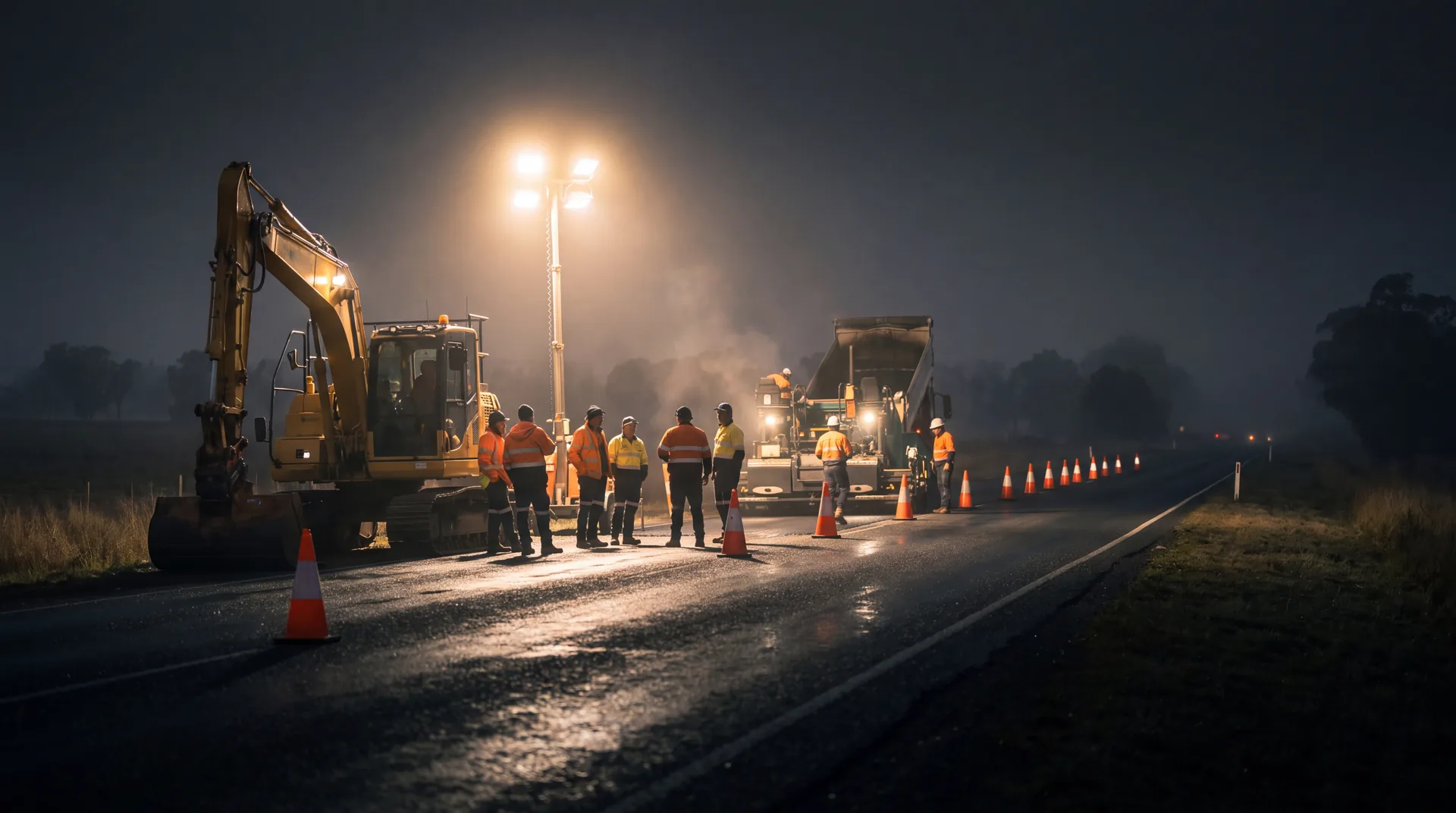
Marketing for civil infrastructure contractors
Marketing built around the way civil work is actually won: prequalification categories, evidence for the submission, and a client side that has already formed a view before the interactive workshop.
Where the money moves.
A civil contractor's marketing does not end at a lead form. It ends in a submission. Everything a Bid and Marketing Manager needs at four o'clock on the Friday before an EOI closes, the referee-verified project sheet, the current safety and environmental statistics, the photograph of the completed structure, the sustainability rating, sits in one library or it does not exist. We build that library as a marketing asset rather than a folder on a shared drive, then keep it current between submissions, so the writing week is spent on the response instead of chasing a superintendent for a photo of a bridge deck.
Prequalification is the gate. National scheme categories, state road authority registers and council panels each carry their own refresh windows, and the work that lifts a category looks like marketing work: documented capability, current financial and performance evidence, referees who answer the phone with a specific story rather than a compliment. We map the panels you sit on, the ones you want, and the evidence gap between the two. The content programme then fills that gap in the order the refresh calendar demands, not the order the schemes happen to be remembered in.
Alliance and early contractor involvement selection is decided by people who have already formed a view of your team. Client-side project directors, superintendents and delivery partners read LinkedIn, they sit through the same conference sessions, and they remember which contractor explained how a live rail possession was staged inside a 26 hour window. Visibility with that audience is not brand advertising. It is the same technical evidence that sits in the tender library, published where the selection panel already spends attention, under the names of the engineers who will be in the room at the interactive workshop.
Reporting is written against pipeline. Which categories you entered, which submissions the evidence supported, which client-side people engaged with which piece of work. Ad accounts, domains, the image library and the profiles sit in your name from the first day, so photography you paid for and project data your team assembled remain yours whatever happens to the arrangement. Strategy, writing, photography direction, search and the digital channels are run by one accountable team, which is why the person who wrote your capability statement also wrote the project page it links to.
What we run.
The tender library
One current source for referee-verified project sheets, safety and environmental statistics, plant and workforce data, photography and sustainability ratings. Version controlled, indexed by category, ready the night before an EOI closes rather than assembled in the week it is due.
Project pages a procurement officer can use
Each completed job written up with quantities, duration, client, delivery model and the constraint you solved: the live traffic staging, the contaminated spoil, the flood window. Photographed properly, and linked from the submission so an evaluator can see the work you described.
Prequalification evidence
We map the schemes and panels you hold, the categories you are chasing and the evidence each one asks for, then produce against the refresh calendar. A category upgrade stops being a fortnight of unplanned scramble.
Visibility with the client side
Project directors, superintendents and delivery partners form a view long before an interactive workshop. Your engineers publish the staging methods and the site problems they solved, under their own names, in the places that audience already reads.
Search for the next category
The site structured around the work you want next: bridgeworks, bulk earthworks, drainage, rail possessions, remediation. Written so a procurement researcher and an AI answer both find you while a shortlist for that category is still being scoped.
Questions we get asked.
It changes what is available on the day you write. A submission is scored on evidence, and evidence has to be produced before it is needed: photography, referee statements, quantified outcomes, current statistics. Marketing that feeds the library shortens the writing week and lifts the quality of every response. The visibility work runs alongside it, aimed at the people who assemble shortlists.
We do. Your project engineer gives us twenty minutes on the phone about how a stage was sequenced, we draft it, and it returns for a technical check before anything is published. Engineers approve rather than author. That single conversation usually produces a project sheet, a website page and the posts that go with them.
No. The bid team owns the response. We own the material it draws on and the visibility around it, so the library is current, the photography exists, the project pages are written, and the client-side audience already recognises the names in the submission. Where you want it, we also design and format the document itself.
Nothing is published without clearance. We work to what your contract and the client's communications protocol allow, get written approval for imagery on principal-controlled sites, and keep the detailed version inside the tender library where only an evaluator sees it. Public content carries the parts already in the public record.
Talk to us.
9 services under one team, run against the numbers your business already reports on.





Contact the Ignis Team
Send through your details and we will audit your business before we reply.